
Photoleap
All-in-one AI-powered photo editing for creators and professional digital artists.
Updated 11d ago
PricingFreemium
Free to $199.99/yr
AI Outpainting
Text-to-Image Generation
Object Removal

Transform empty properties into professionally staged homes in under 10 seconds using advanced diffusion architecture.

Virtual Staging AI, incubated at the Harvard i-lab, represents the 2026 gold standard in automated property visualization. Its technical core leverages a custom-tuned Stable Diffusion XL (SDXL) backbone integrated with proprietary ControlNet layers for precise architectural geometry preservation. Unlike early-gen tools, its 2026 iteration employs advanced depth-estimation and semantic segmentation to distinguish between structural elements (walls, floors) and transient objects. This ensures that furniture placement adheres strictly to the physical laws of the space, including realistic light-bounce, shadow casting, and occlusion handling. The platform has transitioned from simple image overlays to a full latent-space manipulation engine, allowing users to remove existing clutter, swap flooring materials, and change room styles (from Scandinavian to Industrial) while maintaining sub-millimeter scale accuracy. Its market position is solidified by its speed—processing high-resolution renders in sub-10-second cycles—and its compliance with real estate disclosure regulations through automated metadata tagging. For enterprise clients, the platform provides a robust API that integrates directly with MLS (Multiple Listing Service) platforms, automating the enhancement of thousands of listings per hour with zero human intervention.
Virtual Staging AI, incubated at the Harvard i-lab, represents the 2026 gold standard in automated property visualization.
Explore all tools that specialize in remove unwanted objects. This domain focus ensures Virtual Staging AI delivers optimized results for this specific requirement.
Explore all tools that specialize in material swapping. This domain focus ensures Virtual Staging AI delivers optimized results for this specific requirement.
Uses LoRA (Low-Rank Adaptation) and ControlNet to ensure walls and windows remain perfectly rectilinear.
In-painting and out-painting models that reconstruct the floor and walls behind existing furniture.
Parallel processing of one room across multiple stylistic weights (Scandinavian, Luxury, etc.).
Semantic segmentation specifically trained on architectural materials (hardwood, marble, carpet).
Uses global illumination adjustment to turn bright daylight photos into 'Golden Hour' or twilight shots.
Auto-inserts 'Virtually Staged' watermarks or EXIF tags.
RESTful endpoints for high-throughput image processing.
Upload a high-resolution wide-angle photograph of the target room.
Select the 'Room Type' (e.g., Living Room, Bedroom, Kitchen) to calibrate the AI's asset library.
Choose a 'Design Style' from 15+ curated themes like Modern, Transitional, or Farmhouse.
Use the 'Declutter Tool' to highlight existing furniture or mess for removal.
Define 'Key Zones' if specific furniture placement is required in certain corners.
Execute the 'Render' command to generate the latent diffusion preview.
Review the initial output and select from 4 alternative layout iterations.
Use the 'Refinement Brush' to adjust specific materials or lighting focal points.
Request '4K Upscaling' for high-fidelity marketing materials.
Export with 'Before/After' comparison metadata for MLS compliance.
All Set
Ready to go
Verified feedback from other users.
"Users praise the tool for its incredible speed and realistic lighting, though some wish for more granular control over specific furniture models."
Post questions, share tips, and help other users.
All-in-one AI-powered photo editing for creators and professional digital artists.
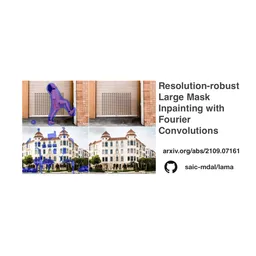
Resolution-robust Large Mask Inpainting with Fourier Convolutions.

Professional-Grade AI Virtual Staging and Interior Design for Real Estate and Homeowners.

AI-powered creative suite for hyper-realistic mobile editing and generative content creation.

A smarter mobile photo editor that gives you creative assistance tailored to your unique photo.

The definitive AI creative suite for professional-grade portraiture and generative art.